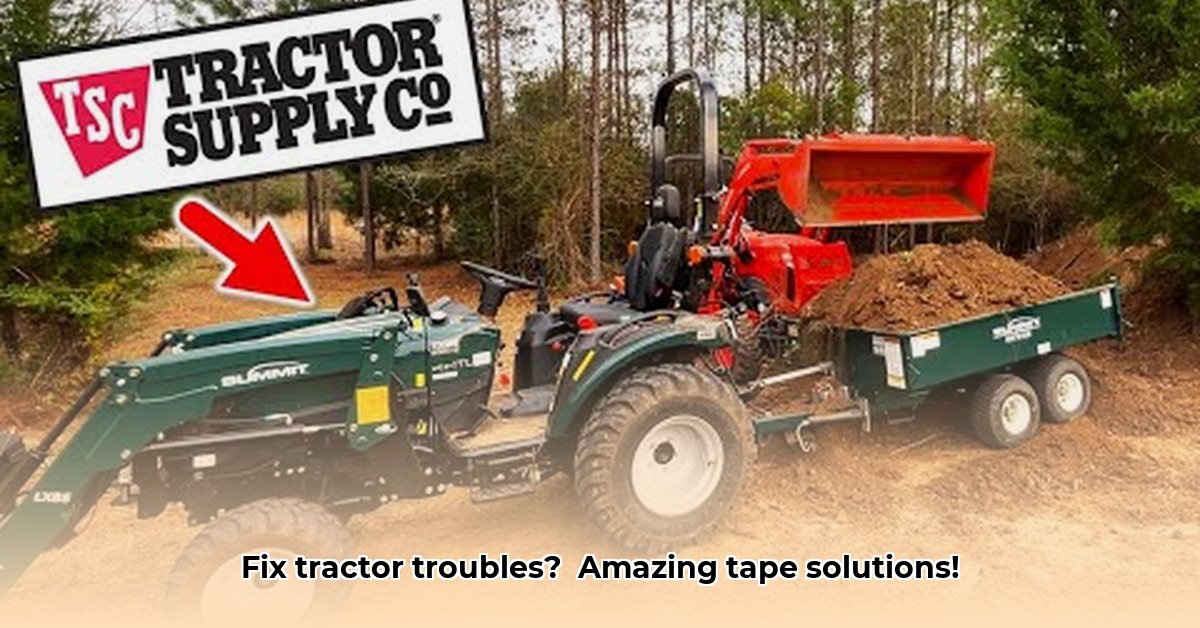
Home Tape for Tractor Repairs: Quick Fixes for the Sustainable Farmer
Tractor downtime is a farmer's nightmare, leading to lost crops and profits. Expensive repairs exacerbate the problem. But what if simple, affordable solutions already exist in your shed? This guide explores the surprising effectiveness of common household tapes for minor tractor repairs, saving you money and keeping your sustainable farm running smoothly. We'll provide step-by-step instructions, compare DIY vs professional repairs, and offer tips from experienced mechanics, helping you to make informed decisions about when and how to utilize home tape for effective repairs. For more sustainable farm building ideas, check out this guide on chicken tractor construction.
When (and When NOT) to Use Home Tape on Your Tractor
Using home tape for tractor repairs offers a cost-effective, readily available solution for minor issues, but its limitations must be understood. It's crucial to remember that tape provides temporary fixes only; it is not a substitute for professional repairs. Applying tape to critical structural elements or safety components is extremely dangerous and should never be attempted. This approach focuses on extending the lifespan of existing, functional parts, aligning with sustainable agricultural practices.
Appropriate Uses:
- Sealing small cracks and leaks (e.g., minor fender damage, small holes in weather shields).
- Temporarily securing loose parts (e.g., rattling covers, loose trim pieces).
- Protecting exposed wiring (a temporary measure to prevent short circuits; professional repair is still needed).
- Marking areas needing further attention (using brightly colored tape).
Inappropriate Uses:
- Repairing major structural damage (compromising the tractor's frame or vital components).
- Fixing broken belts or hoses (requiring proper replacement).
- Addressing safety-critical mechanical failures (brakes, steering, etc. – seek immediate professional help).
- Situations involving moving parts under significant stress.
A Step-by-Step Guide to Simple Tractor Tape Repairs: A Practical Approach
Let's illustrate with a common scenario: repairing a small crack in your tractor's fender. This process emphasizes thorough preparation and careful application for optimal results.
Surface Preparation: Thoroughly clean the area to be repaired. Remove all dirt, dust, loose paint, and debris. A clean, dry surface ensures optimal tape adhesion and longevity. Isopropyl alcohol is recommended for extra effective cleaning.
Tape Selection: Choose a high-quality tape appropriate for the task. Duct tape is generally versatile and robust for many minor repairs. Gorilla tape offers superior strength for more demanding situations. Consider the specific situation to determine the optimal type of tape.
Application: Apply the tape, ensuring sufficient overlap of the edges to create a strong, secure seal. Press firmly across the entire surface to maximize adhesion and eliminate air bubbles. The overlapping layers of tape add to its strength and resilience.
Inspection and Maintenance: After application, regularly inspect the repair. If the tape starts to peel, loosen, or fail, replace it immediately to prevent further damage. Addressing small issues promptly minimizes the risk of larger, more expensive repairs.
Cost Savings and Environmental Considerations: The Sustainable Edge of Home Tape Repairs
Using home tape for minor tractor repairs can significantly reduce maintenance costs. Addressing small problems prevents them from escalating into costly major repairs. However, responsible disposal of used tape is crucial. Researching and utilizing eco-friendly tape alternatives further enhances the sustainability of this approach. This represents one aspect of broader sustainable farming practices.
Dr. Anya Sharma, Agricultural Engineer at the University of California, Davis, notes, "While temporary fixes like tape are cost-effective, prioritizing preventative maintenance and responsible part sourcing remains key to long-term sustainability on the farm."
Choosing the Right Tape for the Job
Different tapes offer varying levels of durability and adhesion, making the correct choice crucial for effective repairs.
- Duct Tape: A versatile option suitable for a wide range of minor repairs, offering a balance of strength and affordability.
- Electrical Tape: Ideal for insulating exposed wires and smaller, more delicate repairs where its conformability is advantageous.
- Gorilla Tape: Provides superior strength and durability compared to standard duct tape. Useful for tougher repairs where increased adhesion is needed.
- Reflective Tape: Offers enhanced visibility, useful for marking hazard areas or potential maintenance issues.
Selecting the correct tape depends on your specific needs and the type of repair needed.
Case Study: Repairing a Loose Fender (Illustrative Example)
Farmer John successfully used duct tape to temporarily secure a loose fender on his tractor after a minor collision. After cleaning the contact points thoroughly, he applied overlapping strips of duct tape, achieving a secure and watertight seal. This allowed him to continue working without costly repairs.
Thinking Sustainably: A Holistic Approach to Tractor Maintenance
Home tape repairs represent one element of a larger strategy for sustainable tractor maintenance. Regular inspections, proactive maintenance, responsible sourcing of replacement parts, and a focus on long-term solutions contribute to a more sustainable and cost-effective farm operation.